_edited.png)
Data Centre Finance in Australia: Where Private Lenders Actually Fit
Australia is in the middle of the largest data centre build-out in its history. AI training loads, sovereign cloud requirements and hyperscaler expansion are pushing developers to lock in sites near power, fibre and water faster than the bank market can move. Data centre finance in Australia is not one product. It is a stack, and the stack includes places where private lenders actually add value.
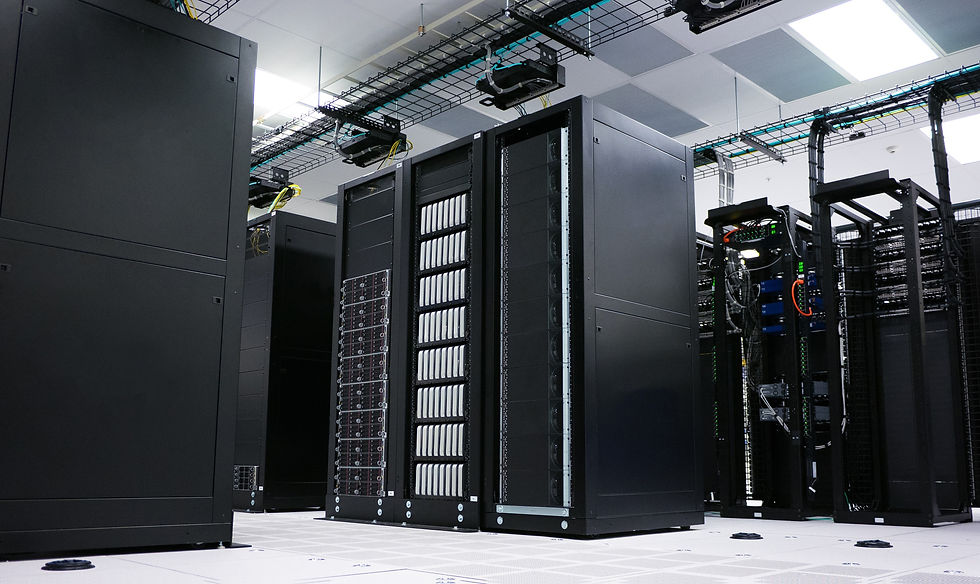
Data centre finance in Australia is layered. Institutional senior debt from banks, super funds and global credit funds covers the $50 to $500 million-plus shell and fit-out. Private and non-bank lenders sit earlier in the cycle, funding site acquisition, land banking, rezoning bridging and mezzanine behind senior. Indicative private lending pricing runs 9 to 14 per cent per annum over 6 to 24 months, subject to zoning, power and exit.
Data centre finance in Australia is layered across institutional senior debt, mezzanine finance, sponsor equity, and private lender bridging.
Private lenders in Australia typically fund the early stages: site acquisition, land banking, rezoning bridging, and DA finance, not the shell build itself.
Indicative private lending pricing for a site play is 9 to 14 per cent per annum over 6 to 24 months, secured by first or second mortgage against the land.
Power availability, zoning, fibre connectivity and a credible exit to institutional debt or a hyperscaler pre-lease determine whether a data centre site file is fundable.
The Australian data centre market in one paragraph
Sydney, Melbourne, Perth and increasingly regional Western Sydney (Kemps Creek, Marsden Park, Eastern Creek), Notting Hill and Truganina in Melbourne, and the Perth outer corridor are the main growth zones. Site prices reflect proximity to major transmission lines, high-voltage substations, dark fibre routes and water. A site with a firm 50 to 100 megawatt power connection can trade at a large premium to raw industrial land nearby. That premium is what most private lending scenarios sit against.
The full data centre capital stack
A typical Australian data centre project is funded in layers. Each layer has a different lender pool.
Layer | Typical amount | Who funds it | Indicative rate |
Sponsor equity | 25 to 40 per cent of TDC | Developer or hyperscaler partner | Equity return |
Mezzanine debt | 5 to 15 per cent of TDC | Global credit funds, specialist non-bank | 10 to 16 per cent p.a. |
Institutional senior debt | 50 to 65 per cent of TDC | Major banks, super funds, global credit | 6.5 to 9 per cent p.a. |
Site acquisition bridge | Full site cost | Private or non-bank lender | 9 to 14 per cent p.a. |
Rezoning or DA bridge | Land only | Private or non-bank lender | 10 to 14 per cent p.a. |
Total development cost (TDC) for a hyperscale project can run $300 million to well over $1 billion. Colocation and edge builds run smaller, from around $30 million upward. The site itself is often 10 to 25 per cent of TDC, and that is where private lending most often enters.
Where private lenders actually fund
Private and non-bank lenders in Australia do not usually write a $200 million senior facility for a data centre shell. That is bank and super fund territory. Where private lenders add real value is earlier in the cycle:
Site acquisition finance. A developer contracts a site that has strong power potential but has not yet secured firm capacity. A private first mortgage lets the developer settle inside 6 to 8 weeks and hold the land while power negotiations and DA work continue.
Land banking. A developer or capital partner assembles two or three adjoining lots to create the footprint a hyperscaler will accept. Private lending funds the assembly holding cost until the site is contract-ready.
Rezoning or planning bridging. Land bought as industrial or rural that needs a rezoning to permit a data centre use, or a specific data-centre-friendly DA. Private lenders can bridge the 12 to 24 months a rezoning takes.
Mezzanine behind institutional senior. For colocation or mid-market data centre projects, a private mezzanine tranche sits behind the bank senior, taking pricing in the 11 to 15 per cent per annum range against a second mortgage.
Bridging out of construction. A short bridge between practical completion and stabilised occupancy, before long-term institutional take-out debt lands.
Each of these has a defined exit: refinance to institutional senior, sale to a hyperscaler, joint venture with a capital partner, or sale of the newly rezoned land to a specialist data centre developer.
Worked example: 12 hectare Western Sydney site with power potential
A developer has contracted a 12 hectare industrial-zoned site in Western Sydney for $48 million. The site is 1.2 kilometres from a Transgrid 330 kilovolt line, has an in-principle expression of interest from Endeavour Energy for a 60 megawatt connection subject to a system impact study, and sits within a precinct where a hyperscaler recently paid materially more per hectare for a comparable parcel. Settlement is 90 days away and the deposit has been paid.
The developer approaches a private lender for a site acquisition facility:
Loan amount: $30 million
Structure: first mortgage over the land
LVR: 62.5 per cent of the contract price
Rate: 10.5 per cent per annum, prepaid
Establishment fee: 1.75 per cent
Term: 18 months
Exit: sale to a hyperscaler or joint venture partner once the power connection agreement is executed, alternative exit is a refinance to a construction senior facility with a bank once the DA is approved
The developer contributes $18 million of equity plus stamp duty. The lender takes comfort from the precinct comparables, the power expression of interest, the borrower's development track record and a clean valuation. Every figure is indicative and subject to valuation and lender assessment.
What lenders assess on a data centre site file
A private lender or non-bank lender looking at a data centre site facility will focus on:
Power. Firm capacity, expression of interest, transmission distance, substation headroom, backup and any grid connection agreements. Power availability is the single biggest value driver.
Zoning and planning. Current zoning, permitted uses, LEP or planning scheme provisions, likelihood and timeline of a rezoning or DA, precinct planning strategy, environmental overlays.
Fibre. Distance to major dark fibre routes, redundancy, latency to Sydney or Melbourne CBD interconnect hubs.
Water. Cooling water availability, recycled water access, discharge approvals.
Site. Contamination, flooding, bushfire, topography, biodiversity, cultural heritage.
Comparable sales. Recent per hectare or per megawatt trades in the precinct.
The sponsor. Track record, balance sheet, ability to fund contingencies, access to institutional take-out debt or hyperscaler relationships.
The exit. Signed HoTs with a hyperscaler, an executed capital partner term sheet, an institutional senior credit-approved commitment, or a live sales campaign.
The stronger the file across these dimensions, the tighter the pricing and the higher the LVR.
Data centre site loan vs bridging loan vs land banking loan
Product | When to use | Typical LVR | Typical rate | Term |
Data centre site acquisition | Contracted purchase pending settlement | 55 to 65% | 9 to 12% | 12 to 24 months |
Bridging loan for rezoning | Sitting on land through a rezoning event | 50 to 60% | 10 to 14% | 6 to 24 months |
Land banking loan | Holding a strategic parcel long-term | 50 to 65% | 9 to 13% | 12 to 36 months |
Mezzanine behind senior | Second mortgage behind bank senior | Combined 70 to 80% | 11 to 16% | Aligned to senior |
A bridging loan is the natural fit where the exit is a defined event (DA approval, hyperscaler settlement). A second mortgage or mezzanine tranche is the tool where an institutional senior sits ahead. Where the land is being assembled and held long-term, a land development loan structure often suits better.
Who a data centre finance play suits
Data centre site and bridging finance suits borrowers who:
Control or can contract a site with genuine power potential and a defensible planning pathway
Have a credible exit through hyperscaler sale, capital partner joint venture, or institutional take-out debt
Have equity capacity to fund the 35 to 45 per cent gap between LVR and total site cost
Understand the market takes 12 to 36 months from acquisition to first megawatt and want to hold the position through that window
Need to move faster than a bank can move
When it may not suit
Data centre finance from a private lender is usually the wrong tool where:
The site has no realistic power pathway and no clear precinct comparables
The borrower has no equity contribution and no defined exit
The strategy relies on a rezoning that has never been signalled by council or the state planning body
The scale is a full construction facility, in which case institutional senior debt is the right product, not private lending
The site is speculative outer-regional land with no fibre, no water and no substation nearby
Risks the borrower carries
Data centre site plays carry specific risks:
Power connection agreements slip, or the utility revises available capacity
Rezoning takes longer than the loan term, forcing an extension at higher pricing
Hyperscaler demand cools locally and the exit sale price drops
Interest rate movement on the institutional take-out debt changes the refinance calculus
Environmental, contamination or heritage findings emerge during due diligence
A realistic contingency, a Plan B exit and a firm read on the power pathway are the three protections that hold the file together.
Settlement timeframe
A clean data centre site acquisition file over metro industrial land can settle in six to eight weeks once valuation, legal, environmental and title searches are complete. Files with easement issues, contamination overlays or first mortgagee consent required can extend to ten to twelve weeks. Where the developer has contracted for settlement in a shorter window, a caveat loan or short-term bridging facility can hold the deposit while the primary facility completes documentation.
How Innovate Funding helps with data centre site finance
Innovate Funding works with private lenders and non-bank lenders across Australia on land development loans, site acquisition bridging and second mortgage structures against industrial, mixed-use and specialised zoned land. Our role on data centre files is packaging: helping developers present the power position, planning pathway, comparable evidence, sponsor covenant and exit strategy in a submission that a private lender can price quickly.
Where the loan is business-purpose, most data centre site facilities sit outside the NCCP and pricing is set by the lender's own credit policy. This is not financial advice. Every deal is subject to valuation, lender assessment and credit approval, and independent legal, tax and planning advice is essential given the scale and complexity of data centre sites.
Frequently asked questions
Do private lenders fund the actual data centre building?
Usually no. The shell, fit-out, mechanical and electrical works for a hyperscale or colocation data centre are institutional senior debt territory, sized at $50 million to $500 million-plus. Private lenders sit earlier in the cycle on site acquisition, land banking, rezoning bridging, and sometimes mezzanine behind a bank senior facility.
What is a firm power connection and why does it matter?
A firm power connection is a signed connection agreement between the site and the network operator guaranteeing a specified megawatt capacity by a specified date. Sites with firm power trade at a large premium to sites with only an expression of interest. Firm power is often the difference between a fundable file and a decline.
How much equity do I need for a data centre site loan?
Most private lenders want at least 35 to 45 per cent of the total site cost as cash equity, plus funding for stamp duty, holding costs and interest. Higher LVR is available where the exit is a signed hyperscaler HoT or a credit-approved institutional take-out.
How long do rezoning and DA typically take?
Twelve to twenty-four months is typical for a data centre rezoning in a supportive precinct. State-significant projects can move faster where a state planning pathway applies. Contested rezonings or sites with major environmental issues can take longer and often need an extension to the private lending facility.
Is a data centre site loan regulated under the NCCP Act?
Business-purpose loans to a corporate developer or trust for site acquisition and development are usually unregulated. Consumer or mixed-purpose lending against a family home can attract NCCP obligations. Borrowers should get independent legal advice on the loan structure.
Can Innovate Funding help with mezzanine behind an institutional senior lender?
Yes, where the file has a credit-approved senior lender, a defined combined LVR cap, and a clear exit. Mezzanine on data centre files usually sits at 11 to 16 per cent per annum, subject to intercreditor terms with the senior lender and lender assessment.
Key takeaways
Data centre finance in Australia is layered across sponsor equity, institutional senior debt, mezzanine and private lending
Private and non-bank lenders sit earlier in the cycle, funding site acquisition, land banking, rezoning bridging and mezzanine tranches
Indicative private lending pricing runs 9 to 14 per cent per annum over 6 to 24 months against a first or second mortgage
Power, zoning, fibre, water and a credible exit are the five levers that decide whether a file gets funded
Business-purpose data centre facilities usually sit outside the NCCP but treatment depends on the borrower and the funds' purpose
Independent legal, tax and planning advice is essential
If you have a contracted site with a real power position and want a private lender's read on the site acquisition or rezoning bridge, speak to the Innovate Funding team with the contract of sale, the power correspondence, the planning brief and a one-page exit summary.


